
Miracle on Everest: Sherpa Survives Six Days Alone in the Death Zone Without Food, Water, or Oxygen
Temba Tsheri Sherpa
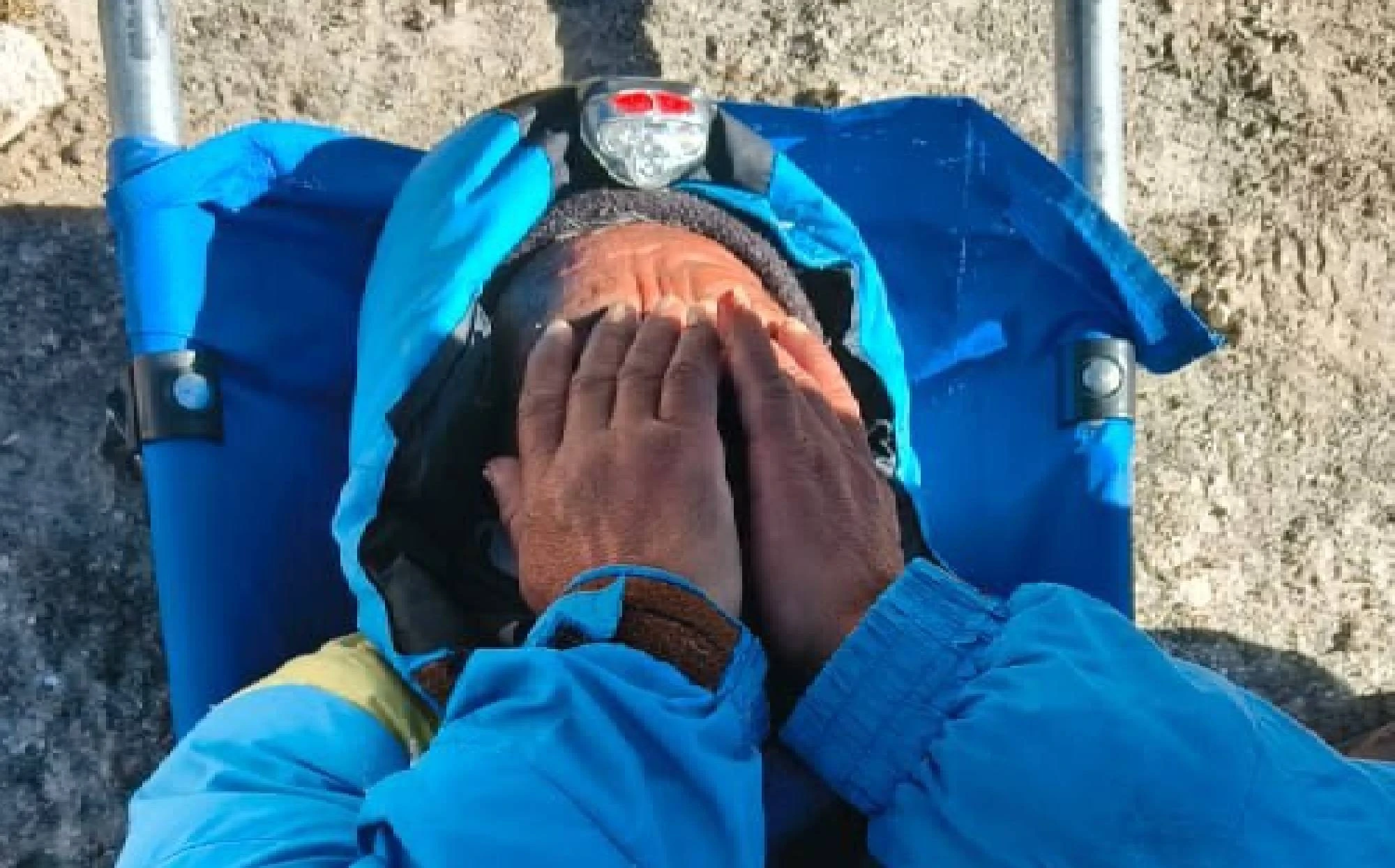
His name is Hillary Dawa Sherpa. He is 52 years old, a father, a seasoned mountain guide from the quiet hill town of Okhaldhunga in eastern Nepal, and as of this week, one of the most remarkable survival stories in the recorded history of Mount Everest.
He did not summit the world's tallest peak. He did not set a record. He did not carry a flag to the top. What he did was far more stunning. He disappeared into the Death Zone on May 29, 2026, with no food, no water, and no supplemental oxygen, and nearly six days later, he crawled out of the Khumbu Icefall on his hands and knees, alive, while the rest of the world had quietly begun to grieve him.
This is the full story of how it happened.
A Routine Descent That Turned Into a Nightmare
The 2026 Everest spring season had been one of the busiest in history. Hundreds of climbers, guides, and support staff had moved up and down the mountain's flanks through May, chasing summit windows between storms.
Hillary Dawa was working as a high-altitude guide for Himalayan Traverse Adventures, a Nepali outfitting company. His assignment was straightforward: assist a Polish client on a summit bid and bring him back down safely.
The two reached the upper mountain but could not make the summit and turned back, as many climbers do. It was a managed retreat, not a failure. The plan was simple. Get down.
On the descent from Camp IV, at roughly 24,600 feet above sea level, Hillary Dawa was accompanying British adventurer Chris Thrall, another client moving down the mountain. Somewhere around that elevation, fatigue caught up with Dawa. He sat down on a rock to rest, his heavy pack still strapped to his back.
Thrall paused and checked on him. "Hillary, are you OK, brother?" he asked. Dawa looked up and told him he was fine. He told Thrall to go ahead. Thrall moved on. He glanced back once and saw Dawa still sitting on the rock.
That was the last confirmed sighting of Hillary Dawa Sherpa for nearly six days.
Left Behind at 24,000 Feet
When Thrall and the Polish client eventually reached Camp II at around 21,000 feet, they reported what they knew. Hillary Dawa had been resting above them and had not followed. The Polish client, himself suffering from severe frostbite on his hands, was in no condition to go back up. Nobody was.
At 24,600 feet, the human body is in a state of slow emergency even under the best conditions. The air holds only a third of the oxygen available at sea level. Without bottled oxygen, mental sharpness deteriorates rapidly. Judgment fails. Muscles refuse.
The cold at that altitude, especially after dark, is savage enough to kill exposed skin in minutes. Hillary Dawa had none of the things a person needs to survive up there: no food, no water, no supplemental oxygen, no shelter beyond the summit suit on his back.
What he had was 52 years of mountain experience, an iron will, and something that doctors and scientists have never been able to fully explain in survivors like him: a refusal to stop.
Six Days the World Did Not Know He Was Surviving
For the days that followed, Hillary Dawa did something almost no one at that altitude has ever done without assistance. He began moving down. Slowly. Painfully. Alone.
The Khumbu Icefall, which sits between the upper mountain and Base Camp, is one of the most technically treacherous sections of the entire Everest route. It is a churning river of glacial ice, riddled with deep crevasses, collapsing seracs, and shifting passages.
Even fully rested, well-equipped climbers move through it with extreme caution. Hillary Dawa moved through it after nearly six days without food or water, likely at the edge of consciousness, with severe frostbite already consuming his hands.
At one point, he fell into a crevasse near Camp I, at around 5,500 metres. He survived it. He climbed out, or found a way through, and kept moving downward.
On June 2, the guiding company 8K Expeditions organised a helicopter search. The crew, which included a pilot, a guide, and one of Hillary Dawa's relatives, swept the area where he was last seen. They found nothing. They searched where logic said he should be. They did not find him because by that point, he had already descended far below where they were looking.
What happened next is the most heartbreaking detail of the entire ordeal. Dawa later told rescuers that he saw the helicopter flying above him while he was still in the icefall. He raised both arms. He waved. Twice. The helicopter did not see him and flew away.
He kept moving.
Found by Garbage Collectors
On the morning of June 4, 2026, a team of workers from the Sagarmatha Pollution Control Committee (SPCC) was doing their daily work near the base of the Khumbu Icefall. The SPCC is responsible for waste management on Everest, collecting the trash and debris left by expeditions. These were not trained rescue personnel. They were not out looking for a missing Sherpa. They were picking up garbage.
And then they saw him.
A figure in a blue and yellow summit suit, the same one he had been wearing since May 29, was slowly sliding and crawling across the ice and rock near Crampon Point, moving in the direction of Base Camp. His boots were gone. His hands were badly frostbitten. He was moving at the pace of a man running on almost nothing, because he was.
The SPCC team reached him immediately. They gave him food and water. They got him to Gorak Shep, the nearest settlement, and from there, a rescue helicopter airlifted him to HAMS Hospital in Kathmandu.
Photographs taken at Base Camp that morning spread rapidly online. They showed a hollowed, exhausted man still in his ragged summit suit, sipping soup, eyes half open, fingers blackened by frostbite. He was alive.
The Reunion
At HAMS Hospital in Kathmandu, his family had been waiting through six days of silence and dread. His daughter, Mhendo Lhamo Sherpa, spoke to reporters outside the hospital after seeing her father.
"He recognised me," she said. "It's good and speaks. We are happy."
Three words. We are happy. After six days of preparing for the worst, three words were enough.
What the Experts Said?
The mountaineering world reacted with something between celebration and disbelief.
Lakpa Sherpa, co-founder of 8K Expeditions, which had led the search effort, called it one of the most incredible things he had ever witnessed on Everest. "Dawa's ability to self-rescue and get to safety," he said, "is something we have never seen before on this mountain."
Billi Bierling, director of The Himalayan Database, the authoritative record of Himalayan ascents, was blunt about the odds. He had no food. He had no water. He had no oxygen. He was probably running on nothing but instinct. "The fact that he came down from wherever he was left," she said, "is an absolute miracle."
Norwegian climber Kristin Harila, who holds the world record for ascending all 14 peaks above 8,000 metres, said the story reaffirmed something the mountain occasionally forgets to teach. "As long as there is hope," she said, "people manage to stay alive."
The Questions No One Can Ignore
Hillary Dawa's survival is a miracle. But it is a miracle that should not have needed to happen.
The guiding industry on Everest operates on a fragile set of assumptions: that clients and guides move together, that no one is left alone above the Death Zone, that signs of distress are acted upon immediately.
On May 29, a guide sat down on a rock at 24,600 feet, said he was fine, and was left there. His clients descended. His company was not informed quickly enough to mount an immediate response. The helicopter search, when it came, looked in the wrong place.
These are not questions meant to assign blame to individuals making decisions in brutal conditions. They are questions the industry must answer honestly: What is the protocol when a guide shows signs of exhaustion at extreme altitude? Who is responsible for turning back to check? How quickly does the rescue chain activate?
Hillary Dawa survived despite the system. The conversation now is about how to make sure the system works before the next Sherpa sits down on a rock and tells someone he is fine.
The Survival That Defied Everything
To summarise what Hillary Dawa Sherpa survived over six days on Everest is to list things that should not be survivable.
Nearly six days without food or water at extreme altitude. Temperatures that drop to deadly lows overnight. A fall into a glacial crevasse. Severe frostbite to both hands. A solo descent of 7,500 vertical feet through some of the most dangerous terrain on Earth, including the Khumbu Icefall. And through all of it, no rescue, no help, no voice on the other end of a radio.
He crawled out on his own.
Hillary Dawa Sherpa is currently receiving treatment in Kathmandu. He is expected to require significant care for his frostbite injuries. His long-term prognosis has not been publicly confirmed.
But he is alive. And in the history of human survival on the highest mountain on Earth, that is something that will not be forgotten.