
Is Manaslu a good first 8000m peak?
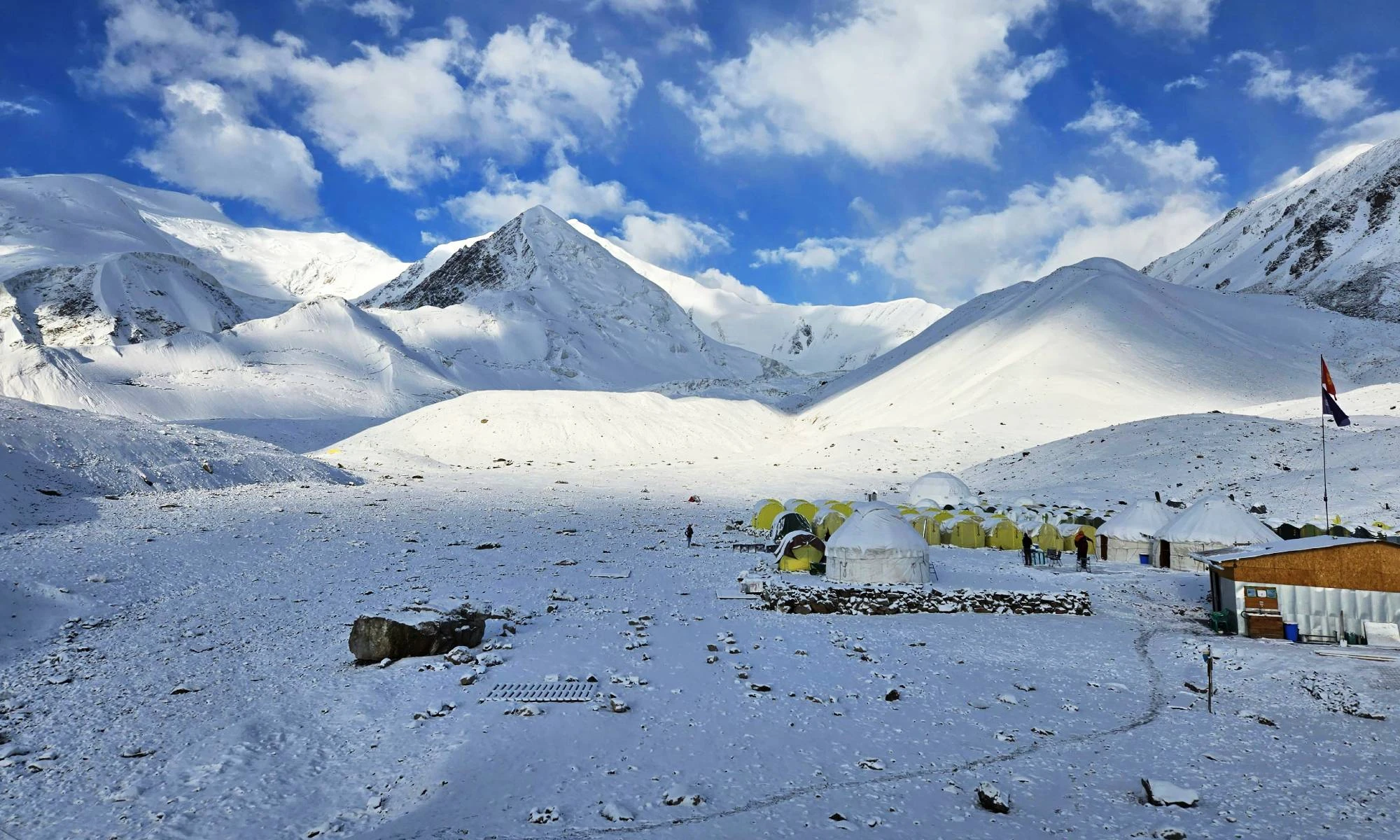
In short, if I need to answer whether Manaslu is a good first 8,000m peak I would say yes, it is, if you are truly ready. It is widely considered the most accessible 8,000m peak, yet it has claimed many lives.
Every year, hundreds of climbers arrive in Nepal dreaming of their first eight-thousander. Many fix their eyes on Everest climbing, but experienced guides including me quietly point them elsewhere: toward Manaslu, the world's eighth-highest mountain at 8,163 metres, looming above the Gorkha district just west of Annapurna.
The mountain has earned a reputation as the "best first 8,000m peak" a label that is partly true and dangerously misleading at the same time. This guide is for those who want the full picture, not the brochure version.
Manaslu Facts at a glance
- · Summit elevation - 8,163m
- · Highest on Earth - 8th
- · Historical fatality rate – 5%
- · Primary season - Sept–Oct
- · High camps – 4
- · Typical expedition – 35
Why Manaslu gets recommended as the First 8000-meter peak climbing?
There are many reasons why Manaslu gets recommended as the first 8000 meter because it is non-technical standard route, it have Well-established fixed lines, there is Strong Sherpa support available, you will not have any political access headaches, you will have good acclimatization structure, you will get the Active rescue infrastructure, also the main part is that the Autumn season is predictable.
The standard Manaslu expedition route: what you'll actually face?
The standard Manaslu expedition route is northeast face which is non-technical, along with the non-availability of rock climbing, no extreme knife-edged ridge. But this description can lull climbers into underestimating what they're walking into.
| Camp | Elevation | Key Challenges | Difficulty |
|---|---|---|---|
| Base Camp | 4,800m | Acclimatisation, logistics | Manageable |
| Camp 1 | 5,700m | Glacier travel, crevasses | Moderate |
| Camp 2 | 6,400m | Steep snow, fixed ropes begin | Demanding |
| Camp 3 | 7,150m | Altitude, exposure, cold | Very hard |
| Camp 4 | 7,450m | Death zone entry | Extreme |
| Summit push | 8,163m | 12–14 hr round trip, seracs, crowds | Extreme |
"The mountain doesn't care that you've done Mera Peak and Island Peak. At 7,800 metres, your body is dying regardless of your CV."
What the Fatality Rate Means on Manaslu?
The fatality rate on Manaslu peak climbing means that if 100 people is doing Manaslu summit how many of them will return safely on the base camp and in that case on Manaslu when 100 people climb it only 95 are able to get back to base camp safely due to which the Manaslu fatality rate is of 5%.
A significant proportion of deaths are caused by avalanches particularly on the section between Camp 1 and Camp 2 and by HACE or HAPE (high-altitude cerebral or pulmonary oedema) developing too quickly for rescue. The 2012 avalanche killed eleven climbers in a single event. "Safer" does not mean safe.
Still, it is the safest if you compare it with the Annapurna (around 25%) or K2 without oxygen (extraordinarily dangerous), but it should not be dismissed.
Who should attempt Manaslu as their first 8000m?
If you are planning to attempt the Manaslu as your first 8000 meter and wondering you shall or not in short I would say yes you can but You should have summited at least one 7000m+ peak with good acclimatization; experience with crampons, ice axe, and ascending/descending fixed ropes under real conditions; solid understanding of AMS, HACE, and HAPE recognition; and ideally, a high-camp night above 6,500m. A résumé of 6000m trekking peaks alone is not sufficient preparation for Manaslu.
But if you have not done these then its Ideal stepping stones before Manaslu include Mera Peak and Island Peak for basic glacier skills, followed by Aconcagua (6,961m) for extended altitude exposure, then Denali or a 7000m Himalayan peak such as Baruntse, Pumori, or Mera Peak via the technical route. Cho Oyu (8,188m) is arguably a gentler introduction still its approach and route are less avalanche-exposed though it sits in Tibet and political access is unpredictable.
As I have mentioned the Cho oyu lets compare both of them:
| Factor | Cho Oyu (8,188m) | Manaslu (8,163m) |
|---|---|---|
| Technical difficulty | Very low | Low–moderate |
| Avalanche risk | Low | Moderate–high |
| Political access | Tibet — variable | Nepal — stable |
| Crowds | Fewer | Growing rapidly |
| Cost | Similar | Similar |
| Typical success rate | 65–70% | 45–60% |
The oxygen question for Manaslu
There is confusion among many climbers that we need the Oxygen cylinder for the Manaslu or not? Well, most guided clients on Manaslu use supplemental oxygen from Camp 3 upward. This is a sound decision that meaningfully reduces medical risk.
Some experienced mountaineers’ summit without oxygen, but for a first 8000m, the marginal prestige of going "O2-free" is vastly outweighed by the additional risk. Use oxygen. Budget for it, plan your flow rate carefully, and have your operator check regulator function before the summit push.
Choosing an operator for the Manaslu peak climbing
Well, when you are climbing the Manaslu peak its important for you to choose an operator which takes care of you and your permits, the one promises you to bring back safe with not just words but with the tactics.
A reputable operator will fix lines early, manage crowds on summit day, enforce turn-around times, and have their Sherpa team trained in wilderness medicine. A budget operator may do none of these things. The price difference between the cheapest and best operators on Manaslu can be $10,000–15,000 USD.
On an eight-thousand, that gap can be the difference between a story you tell and one that others talk about you. In my opinion I would suggest you choose summit 8000 because the company is owned by the Temba Tsheri sherpa an experience sherpa climber who did the Everest summit at the age of 16 and rest is the history in Nepal mountain climbing diary.
"Ask any guide on the mountain how many of their clients they'd genuinely trust to make good decisions at 8,000 meters. The answer is usually 'fewer than half.'
Gear that matters most
Your boots are non-negotiable a high-altitude double boot rated to at least -40°C is required. Down suit quality matters enormously; do not scrimp. Carry chemical hand warmers, know your oxygen regulator inside out, and test every piece of your system before leaving Kathmandu. The mountain will not give you time to problem-solve at 7,500 meters.